

Introduction to Sustainability & Regulatory Initiatives in EU
The European Union (EU) has enacted two critical regulations, the Corporate Sustainability Reporting Directive (CSRD) and the Carbon Border Adjustment Mechanism (CBAM) aim to reduce carbon emissions, improve sustainability reporting and create a more level playing field for companies within and outside the EU.
What is the Corporate Sustainability Reporting Directive (CSRD)?
The CSRD is a major regulatory update that requires a broad range of companies operating within the EU to disclose detailed information about their sustainability practices, environmental impacts, and social governance policies.
Key Features of the CSRD:
Expanded Scope: Unlike its predecessor, the Non-Financial Reporting Directive (NFRD), which applied to large public interest entities, the CSRD now covers a larger group of companies, including:
- Large EU-based companies (both public and private).
- Non-EU companies generating significant revenue within the EU (at least €150 million annually).
- SMEs (small- and medium-sized enterprises) listed on EU-regulated markets.
Mandatory Sustainability Reporting: Companies are required to report on a broad set of sustainability issues, including:
- Climate change and greenhouse gas emissions.
- Biodiversity impact.
- Social and employee matters.
- Human rights.
- Anti-corruption and bribery.
- Standardized Reporting Framework: The CSRD introduces the European Sustainability Reporting Standards (ESRS), which provides a standardized framework for sustainability reporting across the EU. This will make sustainability data more comparable and reliable for investors and stakeholders.
- Assurance Requirement: Reports must be externally audited to ensure their accuracy, with the same level of scrutiny as financial reporting. The assurance must be conducted by an independent third-party assurance provider. While this person or firm must be qualified, they are not strictly required to be chartered accountants. However, they must meet certain professional standards. Assurance providers must have expertise in both sustainability reporting and assurance practices. They need to follow internationally recognized standards for assurance engagements, such as theInternational Standard on Assurance Engagements (ISAE 3000) or similar frameworks.
Timeline:
- The CSRD comes into force in 2024 with phased implementation depending on the size of the company and its reporting obligations. The CSRD will start with limited assurance in 2024, and the transition to reasonable assurance is expected within a few years afterward, likely around 2026 or later. However, the exact timeline depends on the readiness of the market and the development of assurance standards.
What is the Carbon Border Adjustment Mechanism (CBAM)?
The Carbon Border Adjustment Mechanism (CBAM) is a pioneering regulation designed to level the playing field between EU producers and international competitors regarding carbon emissions. As part of the EU Green Deal, CBAM aims to prevent "carbon leakage"—a situation where companies relocate production to countries with less stringent climate policies to avoid carbon costs.
Key Features of CBAM:
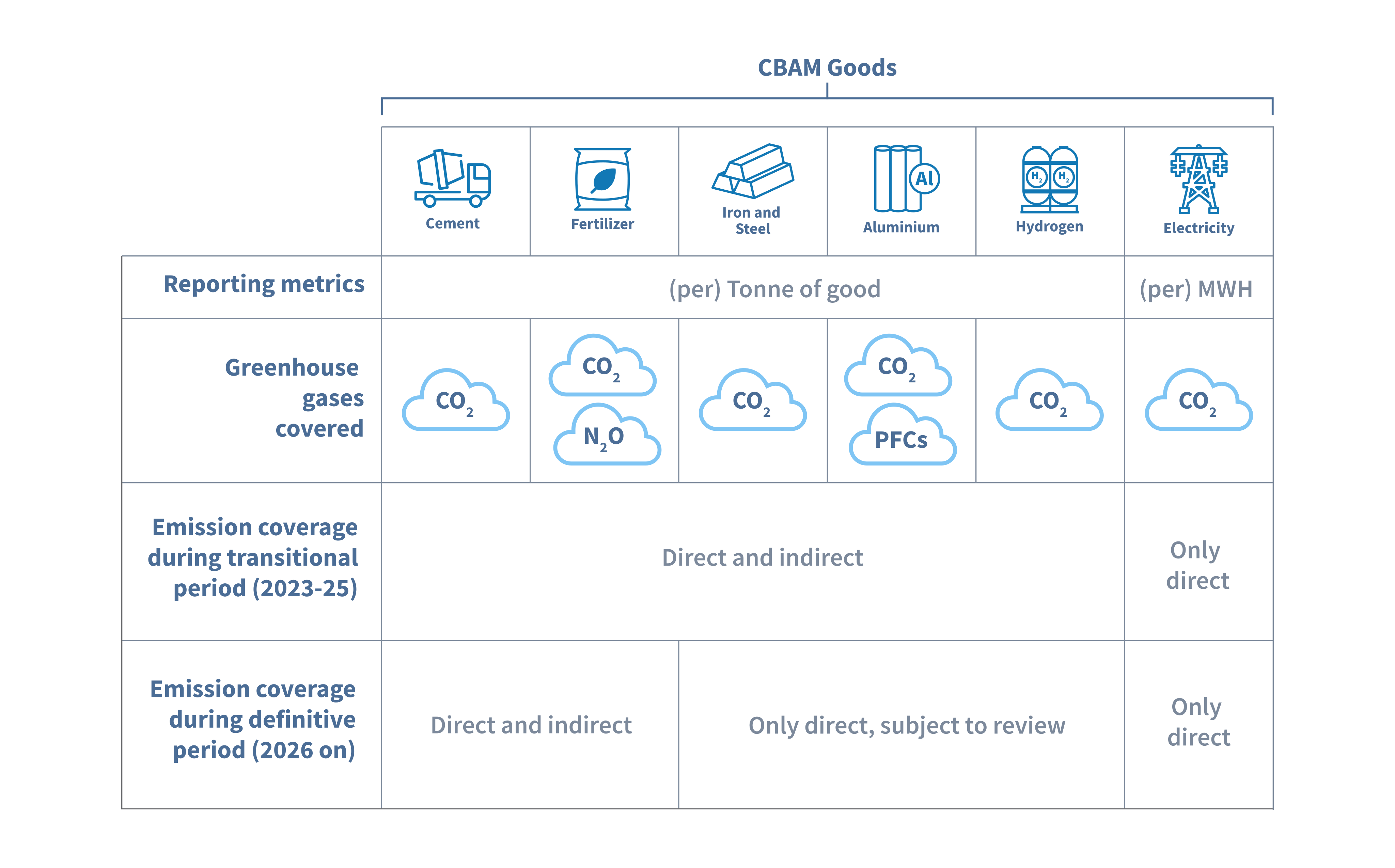
Scope: CBAM applies to industries with high carbon emissions, such as:
- Cement, covered CO2 only
- Iron & Steel, covered CO2 only
- Aluminum, covered CO2 and PFCs
- Fertilizers, covered CO2 and N2O
- Hydrogen, covered CO2 only
- Electricity generation,covered CO2 only
Only aluminum and fertilizer cover multiple greenhouse gases such as PFCs and N2O, while the other four sectors include only CO2 emissions.
- Aluminum: For primary (electrolytic) smelting, both carbon dioxide (CO2) and perfluorocarbons (CF4 and C2F6) must be monitored. For secondary melting (recycling), only carbon dioxide (CO2) requires monitoring.
- Fertilizer: In the fertilizers sector, Carbon dioxide (CO2) and, only in case of nitric acid production, nitrous oxide (N2O) needs to be monitored as they are the primary greenhouse gases emitted during the production process.
Timeline:
- 2023: Transitional phase begins, requiring reporting of direct greenhouse gas (GHG) emissions generated during the production of certain high-carbon good. Importers must submit verified data on the carbon emissions associated with the production of the goods they are bringing into the European Union. This verification must be conducted by an independent third party to ensure the data’s credibility. While specific ISO accreditation (such as ISO 14065 ) may not always be mandatory, third-party verification providers will often need to be accredited by national accreditation bodies recognized by the European Union. These bodies should be capable of assessing whether the verifier meets the technical and procedural requirements for conducting high-quality GHG verification.
- 2026: Full implementation of the CBAM, including the purchase of CBAM certificates.
Conclusion:
For further guidance on how these regulations affect your business and strategies to ensure compliance, feel free to contact us for expert advice.
Let’s Get In Touch
Questions about our courses, pricing, or the path to certification? We'd love to hear from you and will get back to you as soon as we can!
Calgary, AB, Canada

