

Understanding Life Cycle Assessment (LCA) and Environmental Product Declarations (EPD) for Greenhouse Gas (GHG) Footprint: Similarities and Differences
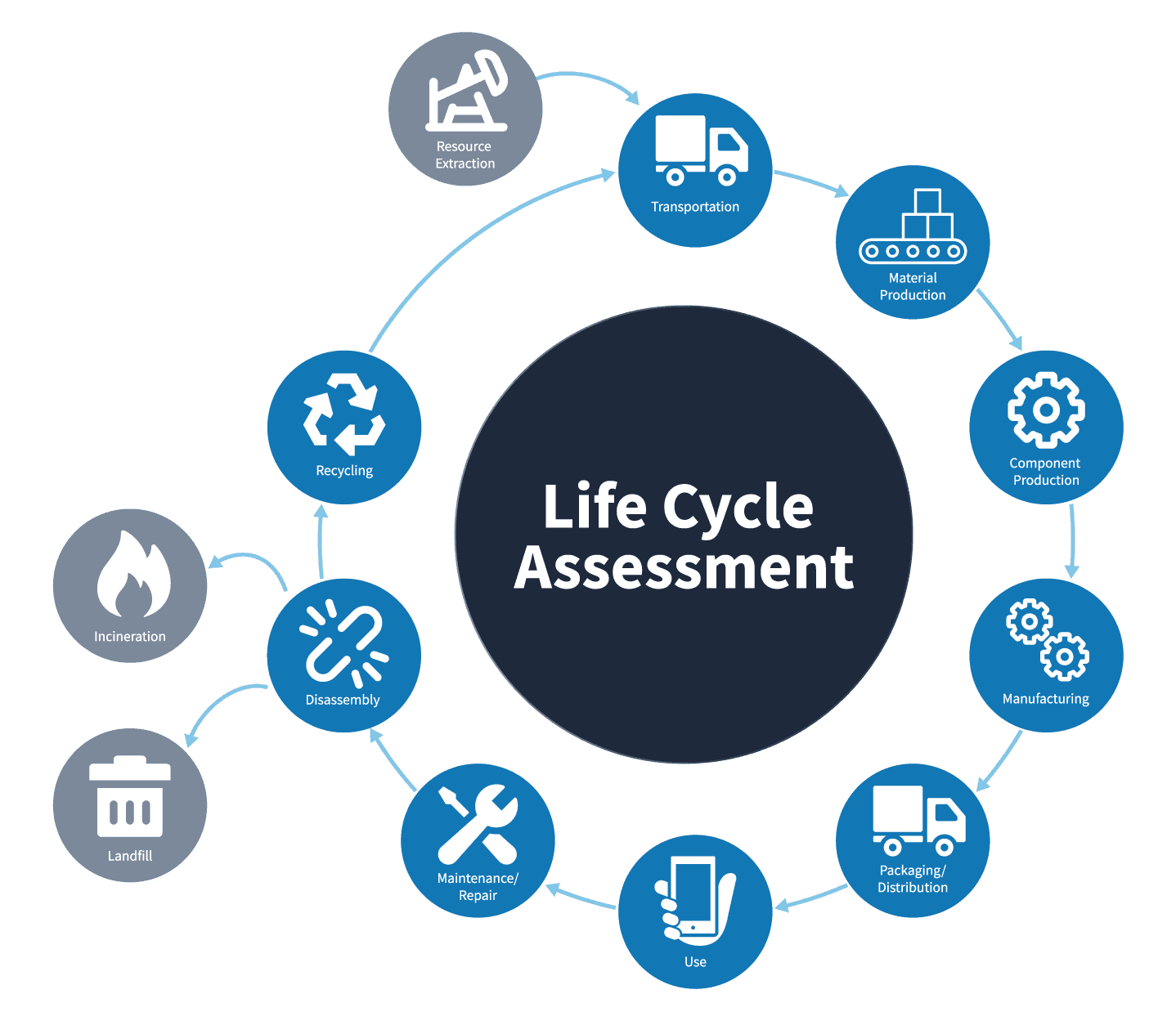
In today’s environmentally conscious world, understanding the impact of products on the environment, particularly their greenhouse gas (GHG) emissions, is crucial for companies, governments, and consumers. Two important tools in assessing and communicating the environmental impact of products are Life Cycle Assessment (LCA) and Environmental Product Declarations (EPD) Both LCA and EPD help quantify the environmental footprint of products, but they serve distinct purpose and are used in different ways. This blog delves into the similarities and differences between these two methods, specifically focusing on their role in assessing the GHG footprint.
What is Life Cycle Assessment (LCA)?
The Life Cycle Assessment (LCA) is a comprehensive method used to evaluate the environmental impacts of a product, process, or service across its entire life cycle. This "cradle-to-grave" approach covers every stage, from raw material extraction, manufacturing, and transportation to usage and disposal or recycling.
LCA provides a holistic view of a product's environmental footprint, assessing multiple impact categories, including:
- Greenhouse gas emissions (GHG footprint)
- Energy consumption
- Water consumption
- Land consumption
- Toxicity and pollution
LCA is standardized under ISO 14040 and ISO 14044, ensuring a consistent methodology for analyzing the environmental impacts of a product. The GHG footprint within an LCA is typically expressed as CO₂ equivalent (CO₂e), capturing various GHGs like methane (CH₄) and nitrous oxide (N₂O) alongside carbon dioxide (CO₂).
What is an Environmental Product Declaration (EPD)?
An Environmental Product Declaration (EPD) is a standardized document that provides quantified environmental data for a product, following rules and methodologies based on a product-specific LCA. EPDs are a communication tool that makes environmental performance transparent and comparable, helping businesses, regulators, and consumers make informed choices.
EPDs focus primarily on the quantification of specific environmental impacts, including:
- Global warming potential (GWP) or GHG emissions
- Energy use
- Resource depletion
- Water and land use impacts
The development of an EPD is based on Product Category Rules (PCRs), which ensure that EPDs for similar products are comparable. The ISO 14025 standard governs EPDs, ensuring transparency and reliability. The GHG footprint in an EPD is also typically expressed in CO₂ equivalents (CO₂e).
Similarities Between LCA and EPD in GHG Footprint Assessment:
- Life Cycle Approach: Both LCA and EPD assess environmental impacts over the full life cycle of a product, from raw material extraction to end-of-life. This cradle-to-grave approach ensures that all emissions, including GHG emissions, are accounted for.
- Focus on Greenhouse Gas Footprint: Both tools assess the GHG emissions of a product and express them in terms of CO₂ equivalents . This metric allows for the comparison of different products or processes regarding their contribution to climate change.
- Standardized Methods: Both LCA and EPD adhere to internationally recognized standards (ISO 14040 for LCA, ISO 14025 for EPD). This ensures that the methodologies used are transparent, consistent, and credible, especially when calculating the GHG footprint.
- Multiple Impact Categories: Although the primary focus here is the GHG footprint, both LCA and EPD cover multiple environmental impact categories, such as resource depletion, energy use, and water consumption, alongside the GHG emissions.
- Quantification and Data: Both LCA and EPDs rely on robust, quantitative data to evaluate the environmental performance of a product. This data-driven approach ensures accuracy in the assessment of GHG emissions and other environmental factors.
Differences between LCA and EPD in GHG Footprint Assessment:
Purpose and Audience:
- LCA: Primarily used by researchers, sustainability teams, and product designers to deeply analyze and improve the environmental performance of products. It serves as an internal tool for identifying hot spots in the product life cycle and optimizing processes.
- EPD: Is intended for external communication and is used to present verified environmental data to customers, regulators, and other stakeholders. EPDs are meant to be public documents that showcase a product’s environmental performance, including its GHG emissions.
Level of Detail:
- LCA: Offers a comprehensive analysis of multiple impact categories, with detailed breakdowns of environmental impacts throughout each life cycle stage. The GHG footprint is just one of many components in an LCA study.
- EPD: While based on an LCA, an EPD presents the results in a more streamlined and accessible format. It focuses on specific, key metrics like global warming potential (GWP), providing a summarized overview of the environmental impacts for easier comparison between products.
Standardization and Comparability:
- LCA: The methodology for conducting an LCA can be customized depending on the specific goals of the analysis. As such, LCAs between different products may not always be directly comparable unless conducted under the same conditions and assumptions.
- EPD: Is highly standardized, ensuring that products within the same category follow the same Product Category Rules (PCRs). This makes it easier to directly compare the GHG footprints of similar products from different manufacturers.
Verification:
- LCA: Typically conducted internally and may or may not undergo third-party verification. The level of scrutiny depends on the purpose of the LCA (e.g., internal product development vs. public reporting).
- EPD: Requires third-party verification to ensure that the environmental data presented, including the GHG emissions, are accurate and in accordance with the relevant PCRs. This verification step ensures trust and reliability for external audiences.
Flexibility:
- LCA: Allows for flexibility in scope and methodology depending on the research question or business objective. It can focus on a product’s full life cycle, a specific stage (e.g., manufacturing), or even compare alternative designs or materials.
- EPD: Is less flexible and follows a predefined structure based on PCRs. The focus is on presenting a set of standardized results for specific environmental impact categories, with a clear emphasis on comparability between similar products.
Conclusion: LCA vs. EPD for GHG Footprint Assessment
Both LCA and EPD are valuable tools for understanding and managing the greenhouse gas (GHG) emissions associated with products. While they share a common foundation in life cycle thinking and standardized methodologies, their key difference lies in purpose and application.
When assessing or reducing the GHG footprint of products, companies should consider using both LCA for in-depth analysis and EPDs for transparent communication with the market. Together, they provide a robust approach to managing and reducing the environmental impact of products throughout their life cycle.
Let’s Get In Touch
Questions about our courses, pricing, or the path to certification? We'd love to hear from you and will get back to you as soon as we can!
Calgary, AB, Canada

